
Trending
This story is from July 15, 2018
Pocket-size wonder
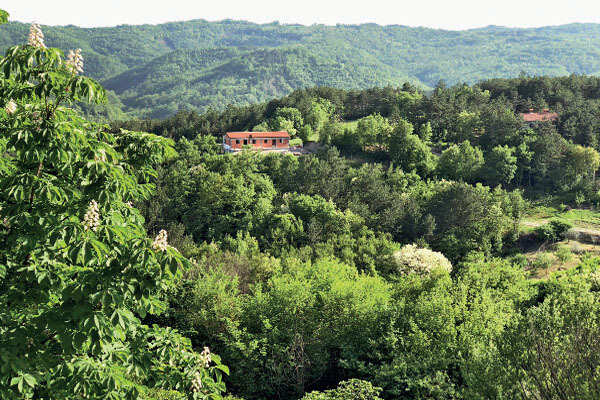
Located in the hinterland of Istrian peninsula, Hum with 28 inhabitants is the smallest town in the world.

We don’t miss the world as the world comes to us,” says Dorris, a proud inhabitant of the smallest town in the world – Hum in Istria, Croatia.
Sipping a glass of humska biska, a home-made brandy peppered with mistletoe, I am lost in a world of castles and churches. Dorris tells me that the ageless recipe is a secret and has been handed down from one generation to the next. The rolling hills carpeted with vineyards, fields and orchards surround this fortified town which is lost in a medieval stupor.
World in a nutshell
Hum with 28 inhabitants has been declared as the smallest town in the world by the Guinness Book of World Records. As Dorris says, the entire world is out here as I can see more tourists than locals. A gentle melody wafts through the air as a singer greets the tourists at the entrance of the 12th century gate that still stands today. An inscription on the main gate welcomes everyone with open arms as it says, “Come and visit this little town, the warmth radiates from its hard stone.”
Legend of hum
Hum is a monument in itself with its melange of historic and mythical stories. A 12th century castle referred to as Castlelum Cholm once stood here at the site of the parish church which was built six centuries later. The Venetian town which was a seat of the feudal lords was used for defence. Years of conflict eventually ended in the burning down of the castle, only to be replaced by the church much later.
Yet, even as a melancholic air looms large over the watchtower you are lured by the fairy tale atmosphere. According to a legend, Hum was built by giants who used the stones that they left behind after erecting the pretty towns in the Mirna valley.
I walk around the two streets within the ramparts where the old homes lie huddled together. While some of them have been converted into cafes, restaurants, museums, shops and bed and breakfasts, the locals still stay here as one big family. The children run around the small lanes filled with arches as their toys remain scattered around. A beaming grandmother plays with the youngest inhabitant of Hum — five-month old Anthea — while Dorris tells me that the 29th member of the town is on its way as her sister is pregnant.
As I leave the town, I can hear the joyous cries of the children playing in the woods. I realise that for them Hum is not just the smallest town but the two streets contain a world by itself.

Surrounding the town are just fields and wineries – Istrian wines are a speciality here. Hikers wander away into the woods around the small town. The neighbouring town of Buzet is known for its truffles, drawing many a tourist. Hum, however, is closer to Italy than to Croatia and even today, Italian is spoken here.
Sipping a glass of humska biska, a home-made brandy peppered with mistletoe, I am lost in a world of castles and churches. Dorris tells me that the ageless recipe is a secret and has been handed down from one generation to the next.
World in a nutshell
Hum with 28 inhabitants has been declared as the smallest town in the world by the Guinness Book of World Records. As Dorris says, the entire world is out here as I can see more tourists than locals. A gentle melody wafts through the air as a singer greets the tourists at the entrance of the 12th century gate that still stands today. An inscription on the main gate welcomes everyone with open arms as it says, “Come and visit this little town, the warmth radiates from its hard stone.”
Hum, earlier known as Cholm, is as old as the hills and is encircled with old walls. Walking in the small square, I head to a church of the Assumption of Mary while the old parish residence stands close by. A 500-year-old watchtower stands guard over the old folk and traditional homes which housed the nobility in the Middle Ages. Frescos adorn the walls of the Romanesque church of St Jerome but it is the “Glagolithic wall writings,” which refer to the oldest Slavic script that fascinate me. Locals tell me that there is a three- km-long “Glagolithic Alley” that connects the towns of Hum and Roc and is filled with monuments dedicated to this ancient script.
Legend of hum
Hum is a monument in itself with its melange of historic and mythical stories. A 12th century castle referred to as Castlelum Cholm once stood here at the site of the parish church which was built six centuries later. The Venetian town which was a seat of the feudal lords was used for defence. Years of conflict eventually ended in the burning down of the castle, only to be replaced by the church much later.
Yet, even as a melancholic air looms large over the watchtower you are lured by the fairy tale atmosphere. According to a legend, Hum was built by giants who used the stones that they left behind after erecting the pretty towns in the Mirna valley.
I walk around the two streets within the ramparts where the old homes lie huddled together. While some of them have been converted into cafes, restaurants, museums, shops and bed and breakfasts, the locals still stay here as one big family. The children run around the small lanes filled with arches as their toys remain scattered around. A beaming grandmother plays with the youngest inhabitant of Hum — five-month old Anthea — while Dorris tells me that the 29th member of the town is on its way as her sister is pregnant.
As I leave the town, I can hear the joyous cries of the children playing in the woods. I realise that for them Hum is not just the smallest town but the two streets contain a world by itself.
Pocket-size wonder
Surrounding the town are just fields and wineries – Istrian wines are a speciality here. Hikers wander away into the woods around the small town. The neighbouring town of Buzet is known for its truffles, drawing many a tourist. Hum, however, is closer to Italy than to Croatia and even today, Italian is spoken here.
About the Author
Lakshmi SharathEnd of Article
FOLLOW US ON SOCIAL MEDIA








Photostories
lifestyle videos
Featured In Lifestyle
Popular Categories
Entertainment NewsBollywood NewsTollywood NewsKollywood NewsMollywood NewsMovie ReviewsLatest Hindi MoviesLatest Tamil MoviesMX PlayerParenting TipsHome RemediesWeight LossBeauty TipsParenting TipsHindi VideosHindi Video SongsBhojpuri Music VideosLatest Telugu MoviesBhojpuri Music VideoHindi TV News
Trending in Entertainment
Latest MoviesBollywood MoviesHollywood MoviesTamil Movies 2024Telugu Movies 2024Malayalam Movies 2024Kannada Movies 2024Marathi Movies 2024Bengali Movies 2024Top Rated Movies 2024Best Hindi MoviesBest English MoviesBest Telugu MoviesBest Tamil MoviesBest Malayalam MoviesBest Kannada MoviesBest Bengali MoviesUpcoming Hindi MoviesBest Movies Of All TimeBest Hindi Movies of All Time
Trending in Etimes
Horoscope TodayNumerology Predictions TodayDinner With TrumpTim WalzIvanka TrumpJose LopezKristina JoksimovicJoe WilsonTrump Eating The Dogs SongGermany NewsKamala HarrisPrince HarryPatriot Day 2024Diabetes RiskHappy Mindfulness Day 2024Trump Vs HarrisJoe JonasPositive Thinking Day 2024Dave Bautista
Trending in TV
Trending in Lifestyle
Trending in Regional
Movie Reviews
Berlin ReviewThe Buckingham Murders ReviewSpeak No Evil ReviewVisfot ReviewThalapathy Is The G.O.A.T ReviewRebel Ridge ReviewDetective Conan vs. Kid the Phantom Thief ReviewBeetlejuice Beetlejuice ReviewPad Gaye Pange ReviewA Wedding Story ReviewThe Diary Of West Bengal ReviewTikdam ReviewKinds Of Kindness ReviewAfraid Review
Upcoming Hindi Movies
Latest News
Meerut building collapse: 3 dead; rescue operations continuePM Modi's Sunday roadshow in Jamshedpur cancelled due to heavy rainHow to identify a real friendTCS teams up with Tata Electronics for ‘made-in-India’ chipsWWE NXT Star Reunites With Father At TNA Victory Road4 types of tea to improve gut health and ease digestive issuesKashmir will soon get a government, but those blinkers are going to stay‘There is no affordable transport currently, the biggest problem in Goa is taxis’Weekly Career Horoscope, September 15 to September 21, 2024: Read your weekly astrological work predictions for all zodiac signs'Hindi must be made acceptable, not imposed'Megha Akash marries Saai Vishnu, celebrities and fans extend their wishesCoin Master free spins and coins for 15 September, 2024: Earn 7 million coins using today’s linksOnam 2024: Pearle Maaney, Sajan Surya, Malayalam TV celebs send warm wishesISL: Odisha's home run broken as Chennaiyin script 3-2 comeback win in season opener at Kalinga37 year old beats fatty liver condition with unbelievable weight lossWhat You’re Always Doing, According to Your Zodiac SignCong holds protests on second anniversary of MLA defectionsCouncillor's bro, 4 others held for hurling stones at Vande Bharat
Copyright © 2024 Bennett, Coleman & Co. Ltd. All rights reserved. For reprint rights: Times Syndication Service